
Data Privacy in Governance Risk Management
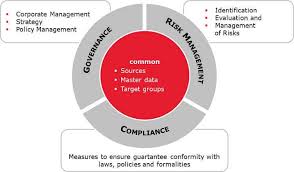
While the world of governance risk management & compliance (GRC) often is divided into separate disciplines, the truth is that many activities overlap and share information. For example, an organization may be subject to new data privacy regulations (a compliance activity), while also holding itself to certain internal data protection controls (a governance activity) that help mitigate cyber risks (a risk management activity). The three fields also impact the same technologies, people and information. When handled separately, these activities can lead to duplication of efforts, missed opportunities and significant waste of resources.
Regulatory changes, including those relating to data privacy, are occurring at a rapid pace. As a result, businesses must rethink how they approach their GRC programs. While some view data privacy as a subset of GRC, it is crucial to integrate it into the program because data privacy impacts the way business operates.
grc governance risk compliance solutions that include data privacy enable organizations to manage and monitor their risks, control activities and demonstrate accountability. Managing privacy risks through a GRC framework helps companies prevent breaches and ensures they comply with new regulations. In addition, it reduces the risk of fines and reputational damage caused by failing to protect sensitive information.
The Role of Data Privacy in Governance Risk Management
Data privacy encompasses a broad range of practices, from ensuring that individuals are informed about what personal data an organization is collecting to enabling them to request access to or deletion of their data. It also includes determining legal grounds for processing data and establishing appropriate security measures. In addition, data privacy governance enables organizations to create policies that support lawful and transparent processing of personal information.
A comprehensive data grc governance risk compliance program that focuses on the ethical and legal handling of personal data can have a positive impact on a company’s bottom line, by improving efficiency, saving costs and enhancing communication. It also enables companies to be more competitive by providing customers with tailored and relevant services.
For example, a retail business that collects credit card information and personal health data can use a governance framework to automate its security assessment of third-party vendors that process that data, and thereby minimize the risk of a breach by unauthorized parties. It can also implement a privacy by design approach to develop products and services from the outset that incorporate data protection best practices.
Training employees on the importance of data privacy and how to identify and mitigate risks can promote a culture of responsibility and accountability. It can also be beneficial to conduct regular training sessions on new privacy regulations and policies.
Integrated data governance solutions make it easy to connect disparate systems and data repositories, as well as simplifying the management of overlapping information. They can help businesses reduce operational costs, improve data flow transparency and control, and facilitate faster response to new privacy mandates. In addition, no-code integrations lower the barriers for non-technical staff to access and connect data sources, speeding up the implementation of a governance framework and allowing for quick adaptation to changing regulations.


