hedge funds use quote trade
Hedge funds are known for employing sophisticated trading strategies to achieve superior returns while managing risk. One trading method that has become increasingly relevant to hedge funds is the use of quote trade. Given the complexity and scale of hedge fund operations, understanding whether hedge funds use quote trade and how they incorporate it into their trading processes sheds light on how institutional investors optimize execution and market impact.
Quote trade involves requesting a price quote from a liquidity provider or broker and then deciding whether to accept the offered price to execute a trade. This approach differs from placing a standard market or limit order in an open order book, as it offers a degree of price certainty before execution. For hedge funds, whose trades often involve large volumes or complex instruments, quote trade provides a mechanism to negotiate prices discreetly and efficiently.
Hedge funds commonly operate in markets where liquidity can be fragmented or limited, such as foreign exchange (Forex), fixed income, derivatives, and certain over-the-counter (OTC) securities. In these environments, quote trade is particularly valuable because it allows hedge funds to access multiple liquidity providers and request competitive quotes without exposing their trading intentions to the broader market. This reduces the risk of adverse price movements caused by signaling large orders, often referred to as market impact.
By leveraging quote trade, hedge funds can obtain better execution prices and manage the timing of their trades more precisely. When a hedge fund submits a request for a quote, it can compare prices from different counterparties and select the most favorable option. This competitive quoting process benefits the hedge fund by tightening spreads and improving fill rates. Moreover, since quote trade transactions often occur off-exchange or in private negotiation, hedge funds can avoid revealing sensitive trading strategies.
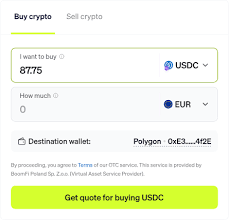
Do hedge funds use quote trade?
Technology plays a crucial role in how hedge funds use quote trade. Many employ algorithmic trading systems that automatically request, evaluate, and execute quote trades across various liquidity venues. These systems integrate smart order routing and transaction cost analysis to optimize execution quality. The ability to request quotes programmatically and respond rapidly to changing market conditions enhances the hedge fund’s ability to capitalize on fleeting opportunities while minimizing execution risk.
Another aspect of hedge funds’ use of quote trade relates to risk management and regulatory compliance. Quote trade mechanisms often provide detailed trade confirmations and audit trails, which are essential for internal risk controls and satisfying external regulatory requirements. The transparency and control over execution prices help hedge funds demonstrate adherence to best execution policies, an increasingly important consideration in today’s regulatory environment.
While quote trade is a powerful tool, it is not without limitations. The quality of the quotes depends on the liquidity providers and market conditions. In highly volatile markets or for illiquid assets, the quoted prices may include wider spreads or less favorable terms. Hedge funds mitigate these risks by diversifying liquidity sources and using sophisticated algorithms to manage execution timing and size.
In conclusion, hedge funds do use quote trade as part of their broader execution strategy. This method allows them to obtain competitive prices, reduce market impact, and maintain discretion when executing large or complex trades. By integrating quote trade with advanced technology and risk management practices, hedge funds can enhance their trading efficiency and achieve better overall performance. As markets continue to evolve, quote trade remains an essential component in the toolkit of institutional investors like hedge funds.